
Scouting Summary
Ashleigh Barty's current window is too thin or skewed for a stable public style read. Only 0 charted matches sit in this window, so the read is still directional. Use the metric cards as directional hints, not a settled profile.
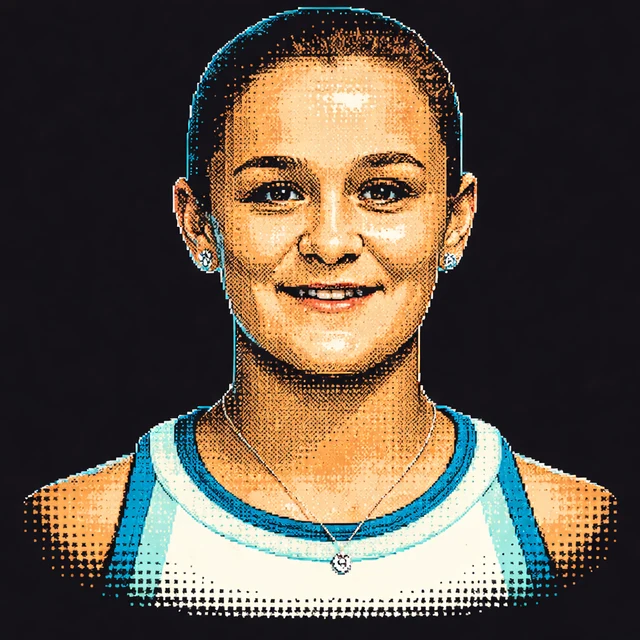
Public WTA coverage-qualified profile built from charted matches. Start with the summary, then follow one reliable trait into the wider tour.
Scouting Summary
Ashleigh Barty's current window is too thin or skewed for a stable public style read. Only 0 charted matches sit in this window, so the read is still directional. Use the metric cards as directional hints, not a settled profile.
The top line stays simple. Expand any card when you want the raw sample, uncertainty, baseline, rank, and nearby names in the leaderboard.
Profile Shape
Missing sample on: Serve variety, Short service points, Forehand attack rate, Break-point attack, Break-point resistance, Net approach rate, Net conversion, Deep return rate.
Read the page like a scout
Deep return rate
Sample too thin
Needs 300+ returnable returns.
Higher values usually mean the return is buying time, pinning the server back, and moving the point off easy first-ball offense.
Adjusted value: Unavailable
Confidence: Confidence unavailable
Sample: 0 returnable returns · weighted 0
Threshold: 300+ returnable returns
Nearby names
No nearby leaderboard context is available here.
Forehand attack rate
Sample too thin
Needs 500+ charted forehand directions.
Higher values point to a forehand that steps on the point instead of simply recycling crosscourt.
Adjusted value: Unavailable
Confidence: Confidence unavailable
Sample: 0 charted forehand directions · weighted 0
Threshold: 500+ charted forehand directions
Nearby names
No nearby leaderboard context is available here.
Serve variety
Sample too thin
Needs 300+ charted serves.
Higher values usually mean the first-ball read is harder because serve patterns are not concentrated in one lane.
Adjusted value: Unavailable
Confidence: Confidence unavailable
Sample: 0 charted serves · weighted 0
Threshold: 300+ charted serves
Nearby names
No nearby leaderboard context is available here.
Net approach rate
Sample too thin
Needs 30+ net points and 600+ total points.
Higher values point to a profile that uses the front court as a recurring pressure tool rather than an emergency option.
Adjusted value: Unavailable
Confidence: Confidence unavailable
Sample: 0 net points across 0 total points · weighted 0
Threshold: 30+ net points and 600+ total points
Nearby names
No nearby leaderboard context is available here.
Net conversion
Sample too thin
Needs 30+ net points.
Higher values point to cleaner front-court execution once the approach or transition decision is made.
Adjusted value: Unavailable
Confidence: Confidence unavailable
Sample: 0 net points · weighted 0
Threshold: 30+ net points
Nearby names
No nearby leaderboard context is available here.
Break-point resistance
Sample too thin
Needs 20+ break points faced on serve.
Higher values point to a service profile that stays stable when the score tightens.
Adjusted value: Unavailable
Confidence: Confidence unavailable
Sample: 0 break points faced on serve · weighted 0
Threshold: 20+ break points faced on serve
Nearby names
No nearby leaderboard context is available here.
Break-point attack
Sample too thin
Needs 20+ break points on return.
Higher values point to a return profile that leans forward at the moment the service game can swing.
Adjusted value: Unavailable
Confidence: Confidence unavailable
Sample: 0 break points on return · weighted 0
Threshold: 20+ break points on return
Nearby names
No nearby leaderboard context is available here.
Short service points
Sample too thin
Needs 300+ charted service points.
Higher values point to service games that stay short and front-footed. Lower values usually mean a profile that lives in longer points.
Adjusted value: Unavailable
Confidence: Confidence unavailable
Sample: 0 charted service points · weighted 0
Threshold: 300+ charted service points
Nearby names
No nearby leaderboard context is available here.
Surface cards only show up when the selected season window has at least 10 charted matches on that surface.
No surface split clears the threshold here.
This season view does not have 10 charted matches on a single surface for Ashleigh Barty.
Methodology
The methodology page explains thresholds, weighting, uncertainty, reliability grades, and why some players or surfaces disappear when the sample gets too thin.
Private workflow
Tour Radar is the public proof layer. Private work starts when your team brings a live coaching question and sends team footage, tracking exports, or official reports or exports it can share.